The Meaning of Incompetence
📅 2026 Update: Changes in U.S. Trials and Legal Procedures
Since the article was written, the landscape of U.S. trials and litigation remains largely stable with no major changes in the Federal Rules of Evidence. However, some state-specific updates and current cost structures provide a clearer picture of the trial process today. The earlier article continues further down the page for more foundational information.
📜 Federal Rules of Evidence
As of October 2023, there have been no significant amendments to the Federal Rules of Evidence. This means that the basic principles governing the admissibility of evidence in court remain intact. For the most up-to-date information, referring to the U.S.
Courts website is a practical approach.
🏛️ State-Specific Updates
Some states regularly update their rules of evidence and trial procedures. For instance, California made updates to its Evidence Code in 2022. Keeping an eye on your state's judicial branch website can help you stay informed about any changes that may affect legal procedures in your area.
💰 Current Fees and Costs
Filing fees for civil cases have remained consistent. As of 2023, the fee for filing a civil complaint at the federal level is $402. In California, the filing fee is $435.
Understanding these costs can help individuals prepare for the financial aspects of initiating legal action.
⏳ Processing Times
The average time to resolve civil cases in federal court is about 10 months. In California, this average stretches to around 18 months. For criminal cases, federal trials typically take between 6 to 12 months from arrest to trial.
These timeframes highlight the importance of patience and preparation in legal proceedings.
📌 Key Points Summary
- Federal Rules of Evidence remain unchanged since October 2023.
- State updates may vary; California made changes in 2022.
- Filing fees: $402 for federal civil cases and $435 in California.
- Average processing times are around 10 months for federal civil cases and 6 to 12 months for federal criminal cases.
💡 Tips for Understanding U.S. Trials
Review the details of your situation with your attorney to ensure you are well-informed about your case.
📝 Know the Civil Trial Steps
Understanding the steps in a civil trial can be beneficial. The process begins with filing a complaint, followed by serving the defendant, and then goes through discovery and trial. Familiarizing yourself with these steps can help you anticipate what comes next.
🔍 Understand the Criminal Trial Process
The criminal trial process starts with arrest and charges, leading to an arraignment where the defendant enters a plea. Knowing these steps can help clarify what to expect if you or someone you know is involved in a criminal case.
⚖️ Be Aware of the Burden of Proof
In criminal cases, the prosecution must prove guilt beyond a reasonable doubt. In civil cases, the plaintiff must show a preponderance of the evidence. Understanding these standards can help you grasp how cases are decided.
🗓️ Keep Track of Deadlines
Be mindful of the statute of limitations, which varies by state and type of case. For instance, personal injury claims in California must be filed within two years of the injury. Being aware of these deadlines is crucial to protecting your rights.
🆓 Explore Free Legal Resources
If you're facing legal issues, consider seeking help from legal aid organizations or public defender services. Many state court websites also offer self-help resources and guides, which can be useful for individuals representing themselves.
🏆 Legal Services Ranked by User Reviews (2026)
This section highlights various legal services that can assist with trials and litigation. These services are ranked based on Trustpilot data checked in October 2026, and while star ratings provide some insight, customer feedback can vary widely. Reviewing user experiences can help individuals find the right support for their legal needs.
🥇 1. LegalZoom
LegalZoom has been rated 4.6. It is known for its online legal document preparation and business formation services. Users appreciate the convenience of its platform.
However, some reviewers mention delays in customer service responses and issues with document processing times.
🥈 2. Rocket Lawyer
Rocket Lawyer holds a 4.5 rating. It offers online legal document creation and affordable legal services. Users find the interface user-friendly, making it accessible for many.
On the downside, some customers feel the subscription model is not ideal for those who need services infrequently and have noted occasional customer support issues.
🥉 3. LegalShield
LegalShield has a Trustpilot score of 4.4. It is recognized for providing legal subscription services, allowing access to a network of attorneys for affordable legal assistance. While many users find value in the services offered, some report challenges in reaching their assigned attorneys and experience slow callback times.
🆓 Free Legal Assistance Options
Various free resources are available for individuals seeking legal help. Legal aid organizations, such as the Legal Aid Society, provide free assistance to eligible individuals. Public defender services are also available for indigent defendants in criminal cases.
Additionally, many state court websites offer self-help guides and forms for those representing themselves.
🔎 Factors to Compare When Choosing Legal Services
- 🏛️ Types of services offered
- 💵 Cost structures and fees
- 📞 Customer support responsiveness
- 📝 User reviews and experiences
- ⏰ Processing times for services
❓ Frequently Asked Questions
❓ What is the role of a jury in trials?
The jury's role is to listen to the evidence presented during a trial and determine the facts of the case. They then deliver a verdict based on these facts.
📜 How long does a civil trial usually take?
On average, a civil case in federal court takes about 10 months to resolve. In state courts like California, this average can extend to around 18 months.
⚖️ What happens during an arraignment?
During an arraignment, the defendant is formally presented with charges and asked to enter a plea. This step is crucial in the criminal trial process.
📅 What are discovery deadlines?
Discovery deadlines refer to the timeframe parties have to exchange information and materials before trial. These deadlines are typically set for 30 to 60 days before the trial date.
✋ What are common objections in court?
Common objections include relevance, hearsay, and leading questions. Attorneys raise objections during trials to protect their clients' interests and ensure fair proceedings.
📈 How can someone access public defender services?
Indigent defendants in criminal cases can access public defender services through the court system. They must meet specific financial criteria to qualify for representation.
⚖️ Recent Cases Impacting Trials and Litigation
Recent court rulings have shaped how trials and litigation are handled in the U.S. These decisions can affect various aspects, such as evidence rules and jury instructions, which relate to the processes discussed in this article.
- Georgia court dismisses appeal in McCammon vs. Bankers caseCourt of Appeals of Georgia · June 4, 2026
- Texas court dismisses appeal in eviction case as mootTexas Court of Appeals, 9th District (Beaumont) · June 4, 2026
- Florida court affirms decision in Taylor divorce appealDistrict Court of Appeal of Florida · June 5, 2026
- Court dismisses Cuyler's appeal in mortgage foreclosure caseDistrict Court of Appeal of Florida · June 5, 2026
For more information, you can check more rulings on the news page.
End of October 2026 Update
An objection of incompetence might be raised by either the prosecution or the defense in a trial, in order to have the evidence granted by a given witness disallowed on the grounds that the witness in question is incompetent to provide such evidence, or to testify in some capacity. The incompetent objection generally has two forms, one of which has to do with whether the individual giving testimony is considered mentally competent, the other of which has to do with expert witnesses.
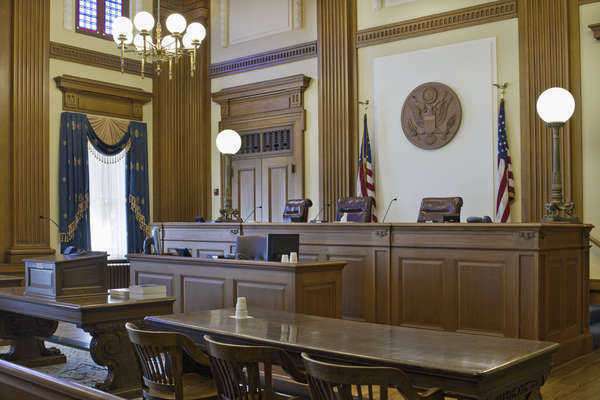
In the first form of the incompetent objection, an individual might be deemed unfit to give testimony because he or she might be deemed mentally incompetent in some significant capacity. For example, an individual with severe and significant psychoses might have his or her testimony disallowed on grounds of incompetence, as might an individual who simply experiences consistent audiovisual hallucinations. The testimony of a child, as well, might be disbarred on grounds of incompetence, though this would likely require certain extenuating circumstances, such as the fact that the child went through severe trauma and thus might not be fit to testify. Such an objection would normally be raised upon putting the witness on the list.
The second form of the incompetence objection revolves around the notion that an expert is not as competent as he or she claims to be. This objection of incompetence would thus concern the expert’s abilities to actually give thoughtful, specialized judgment in his or her areas of expertise, and such an incompetent objection would likely be raised at the time the expert was being brought into court.